
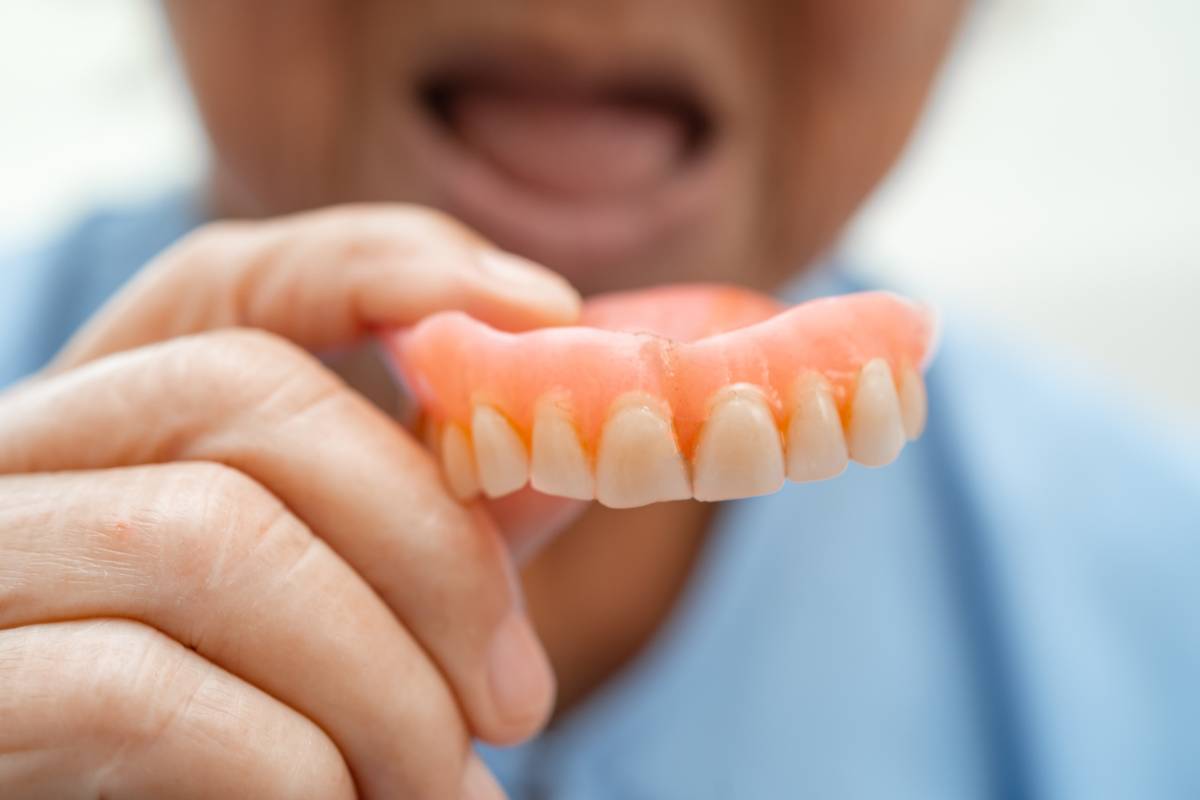
People who just start wearing dentures often ask: What can help me adjust to dentures? In this article, we provide tips on how to enhance denture comfort and discuss the differences between implant-supported dentures and traditional ones in daily use.
What Can Help Me Adjust to Dentures?
Dentures are an excellent solution for individuals missing natural teeth, as they can improve confidence and overall nutrition. However, it might be challenging to get used to wearing dentures, as they might shift in the mouth, rub soft tissue, cause irritation and sores, or slip when you eat or speak. Let’s examine the key components of enhancing denture comfort.
Correct Diet
Traditional dentures provide only about 20 to 25 % of our natural biting force and come with some dietary limitations. To prevent dentures from shifting in the mouth or slipping when eating, we recommend opting for soft foods. Cut your food into small pieces and chew slowly and carefully. Also, avoid very hot foods and drinks that can cause burns or warp your dentures.
Sufficient Oral Hygiene and Sores and Irritation Management
Dentures can irritate the gum tissue and cause sores, especially when you first start wearing them. Maintaining good oral hygiene and making sure you remove food residue and plaque from your mouth and your dentures is essential to reducing irritation in the mouth.
We recommend cleaning your gums and remaining teeth, if present, twice a day, rinsing your dentures and your mouth after every meal, and thoroughly cleaning your dentures every evening.
Additionally, you can try saltwater or camomile rinses to reduce bacteria and inflammation in the mouth.
Speaking Practice
Speaking with dentures can take some getting used to. A first, you might have a lisp or mispronounce some sounds. However, these issues should go away as you get used to your new appliances. We recommend practicing speaking as much as possible to make the adaptation faster. You can try reading aloud, practicing tongue twisters, and singing to help your tongue and facial muscles adjust.
Denture Adhesives
Denture adhesives might help make your dentures more stable in the mouth and reduce gum tissue irritation. Do not forget to thoroughly wash off the adhesive from your gums and dentures every evening.
Denture Adjustments
In some cases, denture discomfort might be caused by your dentures not being appropriately fitted to your mouth. If you cannot get used to your dentures and they keep shifting in your mouth or slipping, do not hesitate to address the issue with your dentist. Your dentures might need to be adjusted to your mouth more accurately to increase comfort.
Also, if you notice that your dentures become uncomfortable after some time of wear, it might signify that you need a new set or that the current dentures require adjustments. People who are missing natural teeth typically go through a process called bone resorption: the shrinking of the jawbone. This process is natural and expected, but it means that dentures that used to be perfectly fitted before become too big for you.
Comfort of Traditional vs Implant-supported Dentures
Traditional dentures rely only on your gums and jawbone for support, while implant-supported dentures are attached to dental implants that are securely fused with the jawbone. As a result, implant-supported dentures do not move in the mouth and also provide more chewing force—up to 95% present of natural chewing force.
If the condition of your oral and general health allows you to opt for implant-supported dentures, this option is likely to provide superior comfort in day-to-day use compared to traditional dentures.
Get High-quality Dentures at Highland Smiles
If you need traditional or implant-supported dentures, do not hesitate to make an appointment with a reliable dentist at Highland Smiles. We are looking forward to your visit.
 Request Appointment